Here’s something most people get wrong about Tempe.
They hear “college town” and immediately picture cheap rentals, noisy streets, and a real estate market driven entirely by student housing. Then they actually look at the numbers and realize — Tempe is one of the most consistently performing real estate markets in the entire Phoenix metro. Not despite the university. Largely because of it.
Let’s talk about why.
Where Prices Actually Stand
The median home price in Tempe sits at approximately $430,000 as of early 2026 according to Zillow Research. That number has held with impressive stability through the broader Arizona market corrections of 2022 and 2023 — dipping modestly and recovering faster than most comparable markets in the metro.
Redfin currently places Tempe average days on market at approximately 40 days. Properties priced correctly move quickly here. Not 2021 quickly — but quickly enough that buyers who spend too long deliberating regularly lose houses they genuinely wanted.
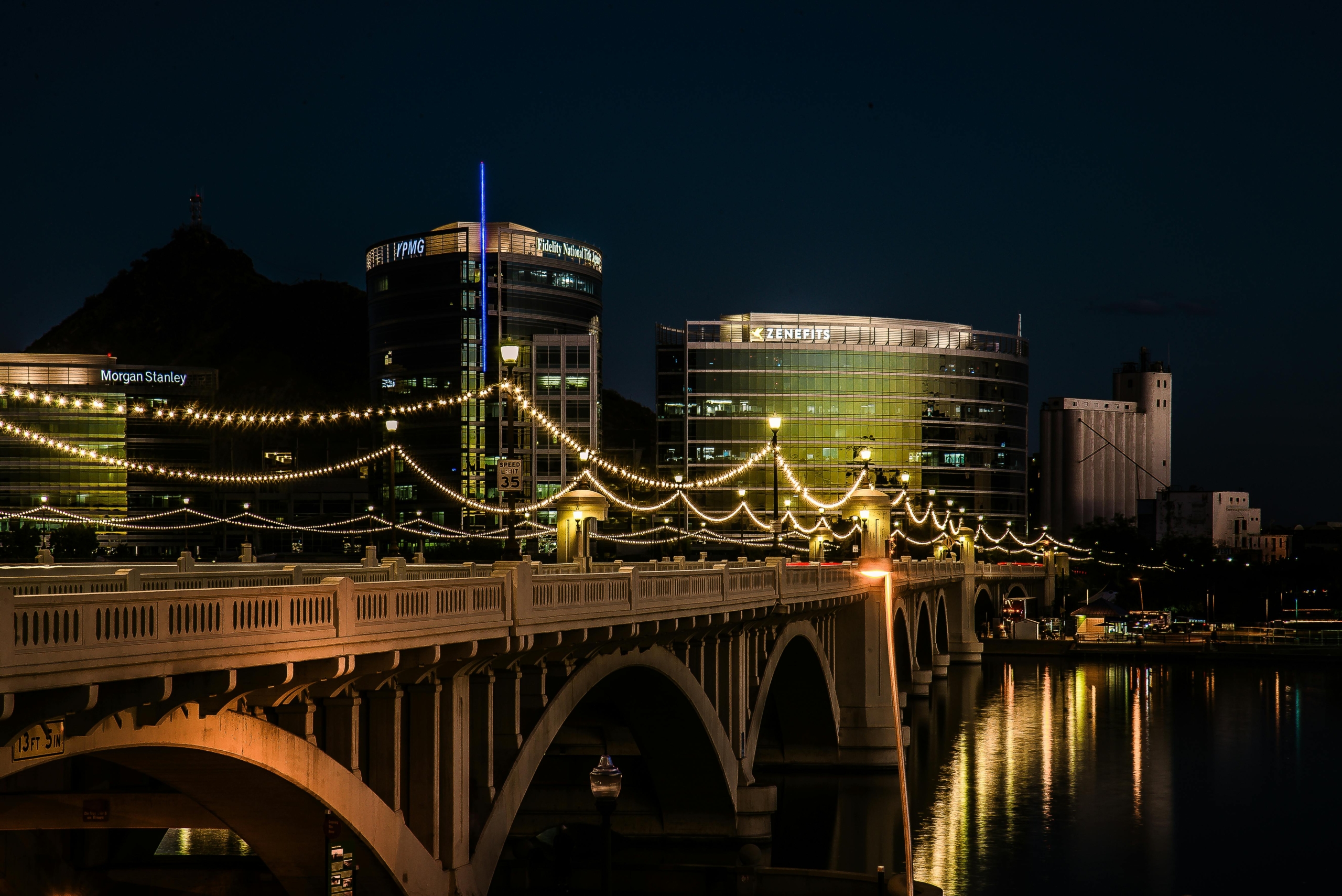
What’s interesting about Tempe’s price point is what it buys you. $430,000 in Tempe puts you within walking distance of light rail, Tempe Town Lake, Mill Avenue, and one of the most genuinely walkable urban environments in all of Arizona. The same money in Scottsdale buys you a condo. In Chandler it buys you a family home in a suburb. In Tempe it buys you a lifestyle that neither of those cities can replicate at any price.
The ASU Effect — And Why It’s More Powerful Than People Realize
Arizona State University enrolls over 80,000 students making it the largest public university in the United States by enrollment. That single fact reshapes Tempe’s real estate market in ways that compound annually and never fully reverse.
Think about what 80,000 students actually mean for a city this size.
They need housing — constantly, predictably, and in volumes that keep rental vacancy rates at levels that make landlords in other cities genuinely envious. Zillow places average Tempe rents at approximately $1,750 per month for a two bedroom — among the strongest rental yields in the Phoenix metro relative to purchase price. Investors who understood this fifteen years ago built portfolios that performed through every market cycle since.
But the student effect goes deeper than rental demand. A significant percentage of ASU graduates every year make a decision — stay in Tempe or leave. Many stay. They got their degree, built their network, found their job, fell in love with the lifestyle, and simply never found a compelling reason to leave. Those graduates become first time buyers. Then move-up buyers. Then the established homeowners who define neighborhood character for decades.
The U.S. Census Bureau tracks Tempe’s median age at approximately 29 years — the youngest of any major city in the Phoenix metro. Young cities with educated populations and strong employment access don’t stay affordable forever. They appreciate. Consistently and stubbornly.
The Jobs Story Nobody Talks About Enough
Tempe’s economy stopped being just about the university years ago.
The Price Road Corridor along the 101 Loop has become one of Arizona’s most significant technology employment hubs. Arizona’s Commerce Authority tracks major employers including State Farm’s national headquarters, Silicon Valley Bank, Go Daddy, and dozens of mid-size technology companies that specifically chose Tempe for its access to ASU talent pipelines.
When major employers anchor themselves in a city they create demand that rental investors and homeowners benefit from simultaneously. The young professional who graduates from ASU, takes a job at a Price Road tech company, and wants to live close to work — that person is Tempe’s most consistent buyer profile. And that profile isn’t going anywhere.
The Neighborhoods Worth Knowing
Tempe is compact enough that neighborhood differences feel more pronounced than in larger Arizona cities. Location here matters in ways that justify serious attention.
South Tempe consistently delivers the strongest family-oriented real estate performance in the city. Communities like Warner Ranch and Fulton Ranch adjacent neighborhoods attract buyers who want Tempe’s access and energy with quieter residential streets and top performing schools. Median prices in South Tempe push closer to $550,000 — reflecting genuine premium demand that the Arizona Association of Realtors tracks as one of the metro’s most stable submarkets.
The Maple-Ash Historic District near downtown is the neighborhood that locals guard like a secret and real estate agents mention in hushed tones. Craftsman bungalows, mature trees, walkable blocks, and a neighborhood character that genuinely cannot be manufactured anywhere at any price. Properties here move fast and rarely disappoint on resale.
The Waterfront around Tempe Town Lake represents the city’s most dramatic lifestyle proposition. Condos and townhomes with lake views and immediate trail access sit in a submarket that Redfin identifies as among the fastest absorbing inventory in the entire East Valley. The combination of scenery, walkability, and urban energy creates demand that transcends typical market cycles.
What Investors Need To Hear
Tempe’s investment case doesn’t require complicated analysis.
A city with 80,000 students, the youngest median age in the metro, major corporate employers, light rail access, and a walkable urban core — that city has structural rental demand that doesn’t depend on market conditions cooperating. The Arizona Department of Housing consistently identifies Tempe as one of the state’s tightest rental markets by vacancy rate. Tight vacancy means pricing power. Pricing power means reliable returns.
Investors who entered Tempe in 2018 and 2019 at pre-pandemic prices are sitting on equity positions that make current prices look reasonable in hindsight. The investors entering now will likely feel the same way about 2026 prices in five years.
The Honest Part
Tempe has real limitations worth acknowledging.
It’s dense. Parking is genuinely difficult near the university and downtown. Game days at Sun Devil Stadium turn the entire city’s traffic into a puzzle with no clean solution. And the noise level in neighborhoods closest to Mill Avenue on weekend nights is not for everyone.
But here’s the thing about Tempe’s limitations — they’re the same limitations that exist in every genuinely urban environment worth living in. Density means walkability. Activity means noise. Demand means prices that don’t apologize for themselves.
The buyers who thrive in Tempe are the ones who stopped looking for a suburb with urban amenities and accepted that what they actually wanted was a city. A real one.
Tempe is that.
Find your Tempe home with an Arizona Nook agent who knows every street, every neighborhood, and every opportunity this city holds. Browse our Tempe agents today.
Sources: Zillow Research — Redfin Data Center — Arizona State University — U.S. Census Bureau — Arizona Association of Realtors — Arizona Department of Housing — Arizona Commerce Authority — Freddie Mac Weekly Mortgage Survey