image by Anthony Simuel
Chandler Arizona Home Prices 2026
What Intel and Microsoft Did To This Real Estate Market
There’s a moment every Chandler homeowner remembers.
The moment they realized the city they chose — maybe for the schools, maybe for the price, maybe just because it felt right — had quietly become one of the most strategically important technology corridors in the entire United States. Not Phoenix. Not Scottsdale. Chandler.
That moment changes how you think about your investment. And it should.
Where Prices Stand Right Now
The median home price in Chandler sits at approximately $480,000 as of early 2026 according to Zillow Research. That number reflects a market that has absorbed the post-pandemic correction more gracefully than almost any comparable Arizona city — dipping modestly in 2022 and 2023 and recovering with a confidence that reflects genuine underlying demand rather than speculative momentum.
Redfin currently places Chandler average days on market at approximately 38 days — among the tightest figures in the entire East Valley. Well-priced properties in Chandler’s most desirable neighborhoods routinely generate multiple offers. The buyers who understand why Chandler commands this kind of demand tend to move decisively. The ones who don’t tend to lose houses and then understand.
The appreciation story here is significant and honest. Zillow tracks Chandler’s median home price at approximately $280,000 in 2019 — representing roughly 71% appreciation in six years. That’s not a bubble. That’s a city whose economic fundamentals caught up with its real estate market and kept pushing.
Intel, Microsoft, and the Price of Being Right
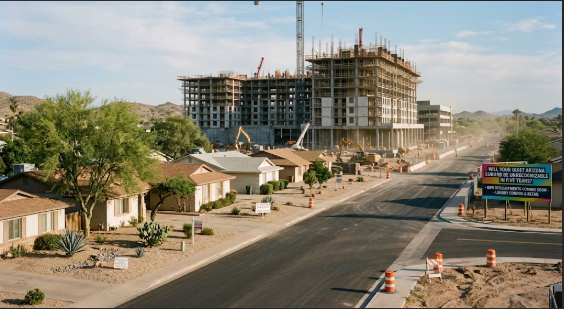
In 2022 Intel announced a $20 billion investment in two new semiconductor fabrication plants in Chandler — the largest private investment in Arizona history according to the Arizona Governor’s Office. That announcement didn’t create Chandler’s technology story. It confirmed what the market already knew.
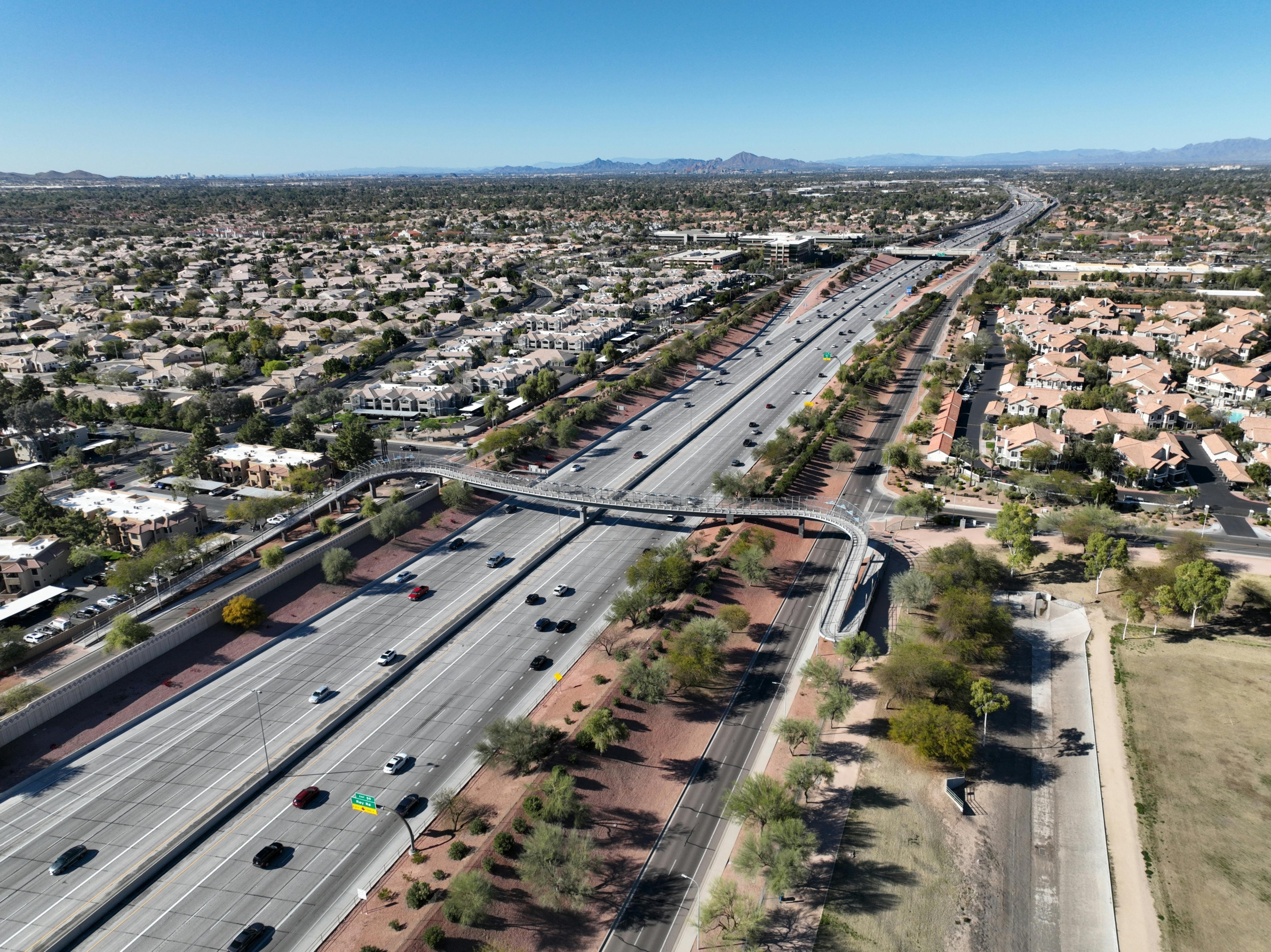
Chandler had been quietly building its technology identity for two decades before Intel made headlines. The Price Road Corridor — running along Price Road between Chandler Boulevard and the 202 Loop — had already attracted Intel’s existing campus, PayPal’s North American operations, Wells Fargo’s technology center, and dozens of mid-size technology companies that specifically chose Chandler for its infrastructure, workforce quality, and quality of life proposition.
Microsoft followed with its own significant Chandler expansion — adding to a technology employment base that the Arizona Commerce Authority now estimates supports over 30,000 direct technology jobs in the Chandler corridor alone. Those jobs pay well. The people holding them buy homes. They choose neighborhoods carefully. They stay.
When technology employment of this quality and scale anchors a real estate market the effect is structural rather than cyclical. It doesn’t reverse when interest rates rise or when broader markets soften. It creates a permanently elevated floor of demand that protects values through cycles that affect less employment-anchored markets more severely.
The Chandler Economic Development office documents the city’s continued active recruitment of technology employers — a pipeline of corporate relocations and expansions that suggests the employment story has additional chapters still unwritten.
The Schools That Drive Everything Else
Technology workers are educated. Educated people with children care about schools with an intensity that directly and measurably drives real estate decisions.
Chandler Unified School District consistently ranks among Arizona’s top performing districts according to Arizona’s Department of Education school report cards. The district operates multiple A-rated schools — the state’s highest designation — and has built a reputation that families specifically relocate to access.
That reputation creates a specific and powerful real estate dynamic. Families who prioritize school quality narrow their search to districts that deliver it — and Chandler Unified is consistently on that shortlist. That structural demand from education-driven buyers provides price support that operates independently of broader market conditions.
Hamilton High School, Perry High School, and Chandler High School each carry reputations that influence neighborhood level values in their attendance zones — creating micro-markets within the broader Chandler market that reward buyers with the knowledge to identify them.
Downtown Chandler — The Proof That Planning Works
Most Arizona cities have a downtown story. Chandler’s is one of the few that actually delivered on its promise.
Downtown Chandler centered around San Marcos Place and Arizona Avenue operates as a genuine urban destination — not an aspiration. Restaurants that require reservations. A Farmers Market that draws from across the East Valley every Friday. Public art installations that reflect genuine curatorial investment. A walkable grid that functions as advertised.
The City of Chandler’s Downtown Development reports document consistent private investment in the downtown corridor — new restaurant openings, boutique retail, residential conversions — that reflects genuine market confidence rather than subsidized development. Private investors don’t put money into downtowns that aren’t working. Chandler’s downtown is working.
The residential properties within walking distance of Downtown Chandler command premiums that Redfin tracks as among the most consistent in the East Valley — holding value through broader market fluctuations with a resilience that reflects genuine lifestyle demand.
The Neighborhoods Defining Chandler’s Market
Chandler rewards neighborhood level knowledge more than most Arizona cities because the quality differences between its strongest and most accessible submarkets are meaningful and measurable.
Fulton Ranch in the southeast consistently delivers Chandler’s most dramatic lifestyle proposition — a master-planned community built around a golf course and lakes with home prices pushing toward $650,000 and a resident profile that reflects the technology corridor employment base directly. Zillow tracks Fulton Ranch as one of the East Valley’s most consistently appreciated master-planned communities over the past decade.
Ocotillo represents perhaps Chandler’s most distinctive real estate story — waterfront living built around a network of lakes and canals in the middle of the desert that creates a lifestyle proposition genuinely unlike anything else in the East Valley. Median prices in Ocotillo push toward $600,000 and properties with direct water frontage command premiums that reflect scarcity more than speculation.
Sun Lakes in the south serves Chandler’s active adult population — a master-planned retirement community with golf, recreation facilities, and a resident community that has consistently maintained property values through every market cycle since its development. The Arizona Association of Realtors identifies Sun Lakes as one of the state’s most stable active adult real estate markets by price consistency.
Dobson Ranch represents Chandler’s most established master-planned community — developed in the 1970s with mature landscaping, lakes, and neighborhood character that newer developments spend decades trying to replicate. Entry prices here remain accessible relative to newer Chandler submarkets — creating opportunity for buyers who value established character over new construction.
The Price Road Corridor adjacent neighborhoods — particularly those in the 48th Street and Dobson Road area — benefit directly from proximity to the technology employment base in ways that create rental demand from corporate relocations and short term assignments that investors specifically target.
What The Rental Market Says
Zillow places average Chandler rents at approximately $1,850 per month for a two bedroom — among the highest in the East Valley and reflecting the income profile of Chandler’s technology-driven tenant base.
The corporate relocation market — employees arriving for Intel, Microsoft, PayPal, and Wells Fargo assignments before purchasing — creates a specific rental demand profile characterized by high income, strong payment reliability, and short to medium term tenure that suits investors comfortable with periodic turnover in exchange for premium rents.
The Arizona Department of Housing identifies Chandler as one of the state’s tightest rental markets by vacancy rate — structural undersupply that supports both occupancy and pricing power for landlords operating here.
The Honest Assessment
Chandler is not cheap. It was never going to stay cheap once Intel arrived — and Intel arrived years ago.
The buyers who made their move in 2018 and 2019 captured the best of what Chandler offered relative to price. The buyers making their move in 2026 are paying for a city whose value proposition is now fully understood by the market.
That’s not a reason to avoid Chandler. It’s a reason to understand exactly what you’re buying and why. You’re buying into one of the most employment-anchored, school-supported, infrastructure-rich real estate markets in the entire Southwest. Markets with those characteristics don’t depreciate easily. They hold. They recover. And over time they reward the buyers who chose them even at prices that felt full at the time.
Chandler felt full in 2019. The buyers who bought anyway look very comfortable today.
Find your Chandler home with an Arizona Nook agent who knows every neighborhood, every street, and every opportunity this city holds. Browse our Chandler agents today.
Sources: Zillow Research — Redfin Data Center — Arizona Association of Realtors — Arizona Department of Housing — Arizona Commerce Authority — City of Chandler Economic Development — Arizona Governor’s Office — Arizona Department of Education — Freddie Mac Weekly Mortgage Survey
Check out the Golden Agent of Chandler

The Chandler Gold Agent
This Gold spot in Chandler is available — only ONE AGENT will ever hold it Before 1st of May 2026
More of our rich Blog here