Queen Creek is where the Phoenix metro finally exhales.
Every other East Valley city has been discovered, developed, debated, and priced accordingly. Chandler is the tech corridor. Gilbert is the family gold standard. Mesa is the value play running out of time. And then there’s Queen Creek — sitting at the southeastern edge of everything, quietly offering the one thing the rest of the metro stopped offering years ago.
Room.
Actual, physical, measurable room. Lots that let you breathe. Backyards that justify the word. Distances between neighbors that remind you what privacy actually feels like. In a metro area that has been systematically eliminating space in exchange for density and convenience — Queen Creek made a different choice. And the buyers who found it first are genuinely glad they did.
Where Prices Stand Right Now
The median home price in Queen Creek sits at approximately $520,000 as of early 2026 according to Zillow Research. That number reflects a market that has matured considerably from its early growth phase — absorbing the post-pandemic correction with resilience and recovering with the kind of steady momentum that reflects genuine structural demand rather than speculative enthusiasm.
Redfin currently places Queen Creek average days on market at approximately 42 days — moving with consistent rhythm that rewards prepared buyers and punishes the ones who need too many weekends to decide. Well-priced properties in Queen Creek’s most desirable communities generate multiple offers with enough regularity that experienced local agents advise buyers to arrive ready rather than curious.
The appreciation story here is significant and honest. Zillow tracks Queen Creek’s median home price at approximately $290,000 in 2019 — representing approximately 79% appreciation in six years. That’s the strongest six year appreciation number of any major Southeast Valley city and it reflects a market that went from genuinely overlooked to genuinely competitive in a timeframe that surprised even the optimists.
Buyers who dismissed Queen Creek as too far in 2018 are now watching those who didn’t dismiss it enjoy equity positions that make the commute conversation feel irrelevant in hindsight.
The Space Story — Why It Matters More Than People Realize
Queen Creek’s defining characteristic is not accidental. It’s the result of deliberate zoning, deliberate land use decisions, and a community ethos that specifically resisted the density-first development philosophy that consumed most of the East Valley before Queen Creek got its turn.
The result is measurable and visible.
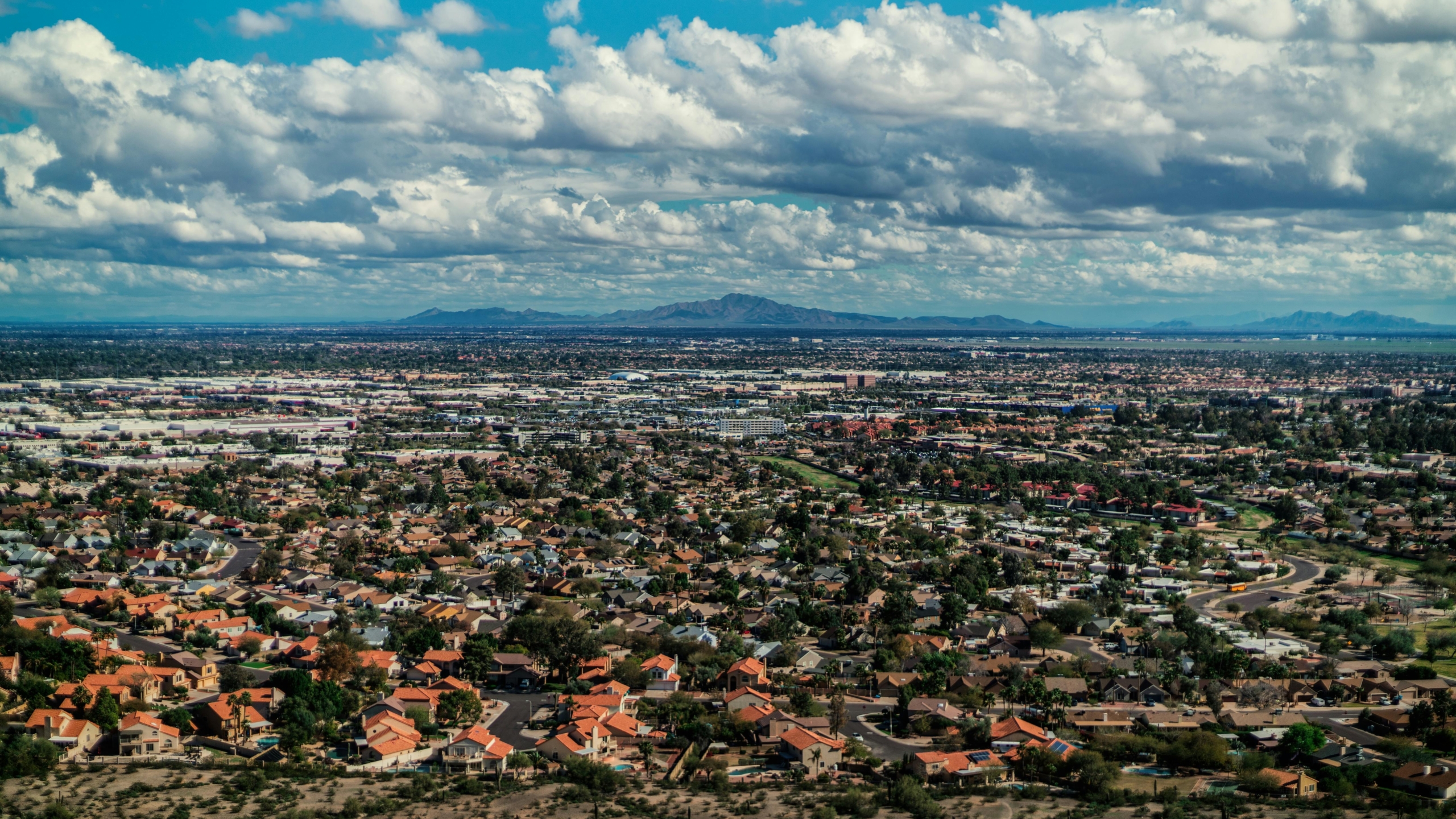
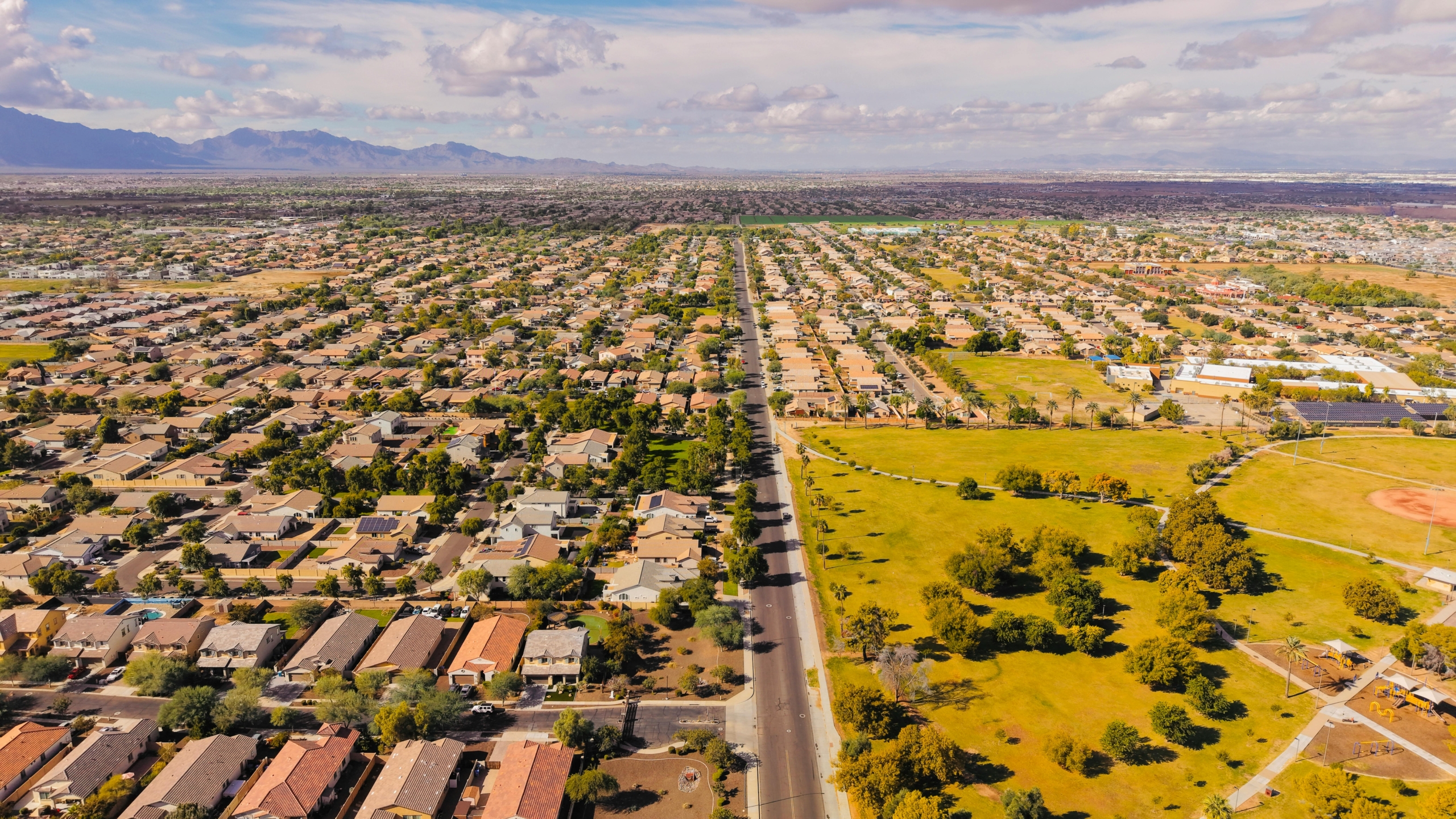
Average lot sizes in Queen Creek run significantly larger than comparable new construction communities in Gilbert, Chandler, or Mesa — with many standard subdivisions offering lots in the 7,000 to 10,000 square foot range and premium communities regularly delivering quarter acre and larger parcels that the denser cities simply cannot replicate without tearing down existing development.
Horse properties remain a genuine and active segment of Queen Creek’s real estate market in ways that distinguish it from every other major East Valley city. The Maricopa Association of Governments identifies Queen Creek as one of the last remaining horse property corridors in the Phoenix metro with meaningful inventory — a designation that attracts a specific buyer demographic characterized by above-average income, strong community ties, and genuine long term commitment to the area that stabilizes neighborhood quality over time.
The San Tan Mountain Regional Park — over 10,000 acres of Sonoran Desert sitting practically within the city’s eastern boundary according to Arizona State Parks — delivers outdoor recreation access that buyers in denser cities pay significant premiums to approximate. Here it’s simply adjacent. Hiking, mountain biking, and open desert that reminds you why people chose Arizona in the first place — available on a Tuesday afternoon without driving thirty minutes to reach it.
Queen Creek Unified School District — The Engine of Demand
Queen Creek’s school story deserves the same level of attention that Gilbert’s receives — because the performance data supports the same level of respect.
Queen Creek Unified School District consistently ranks among Arizona’s top performing districts according to Arizona’s Department of Education school report cards. The district has maintained high performance ratings through the kind of dramatic enrollment growth that typically strains educational quality significantly — a genuine achievement that reflects administrative competence and community investment rather than favorable demographics alone.
Queen Creek High School carries an academic and athletic reputation that has been built deliberately over the past decade — producing outcomes that families researching Southeast Valley school options consistently encounter and respond to with genuine interest. The performing arts program, the STEM curriculum investments, and the college preparation outcomes documented in Arizona’s Department of Education reports reflect a school that has grown into its community’s ambitions.
Bridges Elementary, Vineyard Elementary, and Queen Creek Elementary each carry individual reputations within the district that create neighborhood level real estate premiums in their attendance zones — micro-markets that informed buyers specifically research and target.
The Arizona Association of Realtors consistently tracks school quality as the primary stated driver of buyer decisions in the Southeast Valley — and Queen Creek Unified’s performance record places it in direct competition with Gilbert and Chandler for the family buyer demographic that defines East Valley real estate demand.
The Infrastructure Investment Changing Everything
Queen Creek’s most honest limitation has always been access. One road in and one road out was the critique that kept prices lower than fundamentals suggested they should be — and it was a fair critique for a long time.
That critique is expiring.
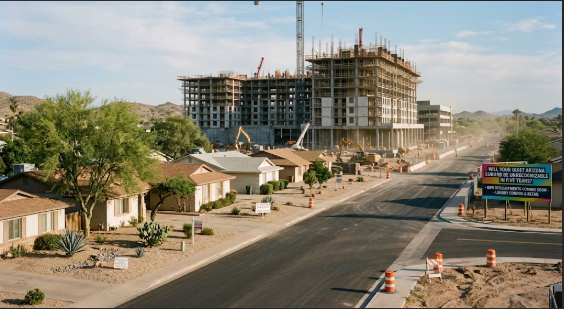
State Route 24 — the new freeway extension connecting Queen Creek westward toward Gilbert and the broader East Valley infrastructure network — represents the single most significant infrastructure investment in Queen Creek’s history according to the Arizona Department of Transportation. The completion of SR-24 doesn’t just reduce commute times. It fundamentally reframes Queen Creek’s relationship with the entire metro — transforming a community at the end of a corridor into a community at the intersection of multiple corridors.
Real estate markets that absorb major infrastructure improvements of this scale historically show price responses that begin before completion and continue for years afterward. The buyers who act on infrastructure announcements rather than waiting for ribbon cutting ceremonies consistently capture the best of the appreciation that follows.
Ellsworth Road has emerged as Queen Creek’s primary commercial spine — growing with the kind of retail and dining density that transforms a bedroom community into a self-sufficient city. The City of Queen Creek’s Economic Development reports document consistent new commercial investment along the Ellsworth corridor that reflects private market confidence in the city’s trajectory.
Rittenhouse Road anchors some of the city’s most desirable master-planned residential development — newer communities built with the infrastructure and amenity levels that attract the demographic driving Southeast Valley demand most aggressively.
The Communities Defining Queen Creek’s Market
Queen Creek’s residential landscape rewards neighborhood level knowledge in ways that broad city statistics cannot capture.
Meridian consistently delivers Queen Creek’s most polished master-planned living — amenity rich, professionally managed, and built around a community infrastructure that produces the lifestyle proposition that families relocating from out of state specifically research and target. Redfin identifies Meridian as one of Queen Creek’s fastest moving submarkets by days on market — reflecting genuine premium demand that operates independently of broader market conditions.
Orchard Ranch represents Queen Creek’s horse property heritage at its finest — large parcels, equestrian infrastructure, and a community character that attracts buyers who specifically want the Arizona lifestyle that magazine covers promise and most subdivisions cannot deliver. Properties here move more slowly than standard subdivision inventory — but they hold value through cycles with a resilience that reflects genuine scarcity rather than speculative premium.
Cortina delivers newer construction at entry-level Queen Creek prices — the most accessible point into a market that has appreciated significantly and shows structural reasons to continue doing so. First time buyers and young families priced out of Gilbert and Chandler consistently discover Cortina as the Southeast Valley option that delivers comparable quality at prices that still make sense.
Hastings Farms offers the mid-range Queen Creek buyer one of the city’s most balanced value propositions — established enough to have mature landscaping and community character, recent enough to have modern construction standards, and priced in the range that represents the broadest segment of active Queen Creek demand.
The horse property corridor along Ocotillo Road and Combs Road represents Queen Creek’s most distinctive real estate micro-market — properties with acreage, agricultural history, and lifestyle characteristics that exist nowhere else in the Phoenix metro at comparable prices. The Maricopa Association of Governments tracks this corridor as one of the region’s last genuine rural-urban interface real estate markets — a designation that reflects genuine scarcity with genuine long term value implications.
What The Rental Market Says
Zillow places average Queen Creek rents at approximately $2,000 per month for a three bedroom — reflecting the larger average unit sizes that define Queen Creek’s housing stock and among the strongest per-unit rental figures in the Southeast Valley.
The family rental market here operates with characteristics that investors find attractive — above-average tenant income driven by the technology and healthcare employment base that dominates Southeast Valley employment, above-average lease lengths driven by school enrollment stability, and above-average property care driven by the community pride that Queen Creek’s resident demographic consistently demonstrates.
The Arizona Department of Housing identifies Queen Creek as one of the state’s fastest growing rental demand markets — population growth outpacing rental supply construction in ways that structurally support occupancy rates and pricing power for investors operating here.
The Honest Conversation About Distance
Queen Creek is farther from downtown Phoenix than Gilbert, Chandler, or Mesa. That’s a fact and it deserves honest acknowledgment rather than defensive deflection.
The commute from Queen Creek to central Phoenix runs approximately 45 to 60 minutes during peak traffic according to Google Maps traffic data — longer than comparable East Valley cities and a genuine consideration for buyers whose employment is centrally located.
The buyers who resolve this honestly tend to fall into three categories.
The first category works remotely — partially or fully — and finds the commute conversation largely irrelevant. Remote work adoption rates in the technology and financial services sectors that dominate East Valley employment have made distance a negotiable variable in ways that were inconceivable five years ago.
The second category works in the Southeast Valley employment corridor — Gilbert, Chandler, or the SR-24 adjacent areas — where commute times from Queen Creek are genuinely competitive with commutes from other East Valley cities.
The third category has done the math and decided that the combination of lot size, school quality, safety, and price differential relative to closer cities justifies the additional drive time. These buyers tend to be the most satisfied Queen Creek homeowners because they chose with full information rather than discovering the commute after closing.
SR-24 changes this conversation materially over the next three to five years — reducing effective commute times and expanding the employment footprint that Queen Creek residents can reach in thirty minutes or less. Buyers making the distance calculation today should make it against the infrastructure reality of 2027 and 2028, not 2024.
The Investment Case
Queen Creek’s investment thesis is straightforward and honest.
This is a city at a specific moment in its development arc — past the purely speculative early growth phase, not yet fully priced into the premium tier that its fundamentals support, and mid-infrastructure-improvement-cycle in ways that historically produce sustained appreciation. That specific combination of characteristics — established demand, underpriced fundamentals, improving infrastructure — is the environment that produces the best risk-adjusted real estate returns.
Zillow projects continued above-average appreciation for Queen Creek relative to the broader Phoenix metro — driven by the SR-24 completion, continued population growth, and the structural undersupply of large-lot family housing that Queen Creek uniquely addresses in the Southeast Valley market.
Investors who understand infrastructure cycles, school quality premiums, and large-lot scarcity dynamics find Queen Creek’s current price point compelling relative to its five year trajectory. The buyers who entered Gilbert at comparable stages of its development arc — past early speculation, mid-infrastructure improvement, fundamentals ahead of prices — built equity positions that validated the thesis with the kind of consistency that makes the Queen Creek comparison feel more like pattern recognition than optimism.
The Bottom Line
Queen Creek in 2026 is doing something increasingly rare in the Phoenix metro.
It’s offering large lots, top performing schools, genuine safety, improving infrastructure, and master-planned communities with real amenities — at prices that still make sense relative to what you’re actually getting. That combination exists almost nowhere else in the East Valley at this price point. And the window during which it exists here is narrowing with every infrastructure improvement, every new commercial opening, and every family that discovers what the early buyers already know.
Large lots. Top schools. Prices that still make sense.
The title of this article was a promise. The data keeps it.
Find your Queen Creek home with an Arizona Nook agent who knows every community, every school zone, and every lot line in this city. Browse our Queen Creek agents today.
Sources: Zillow Research — Redfin Data Center — Arizona Association of Realtors — Arizona Department of Housing — Arizona Commerce Authority — City of Queen Creek Economic Development — Arizona Department of Transportation — Arizona State Parks — Maricopa Association of Governments — Arizona Department of Education — Freddie Mac Weekly Mortgage Survey